
Speech Sound Disorders
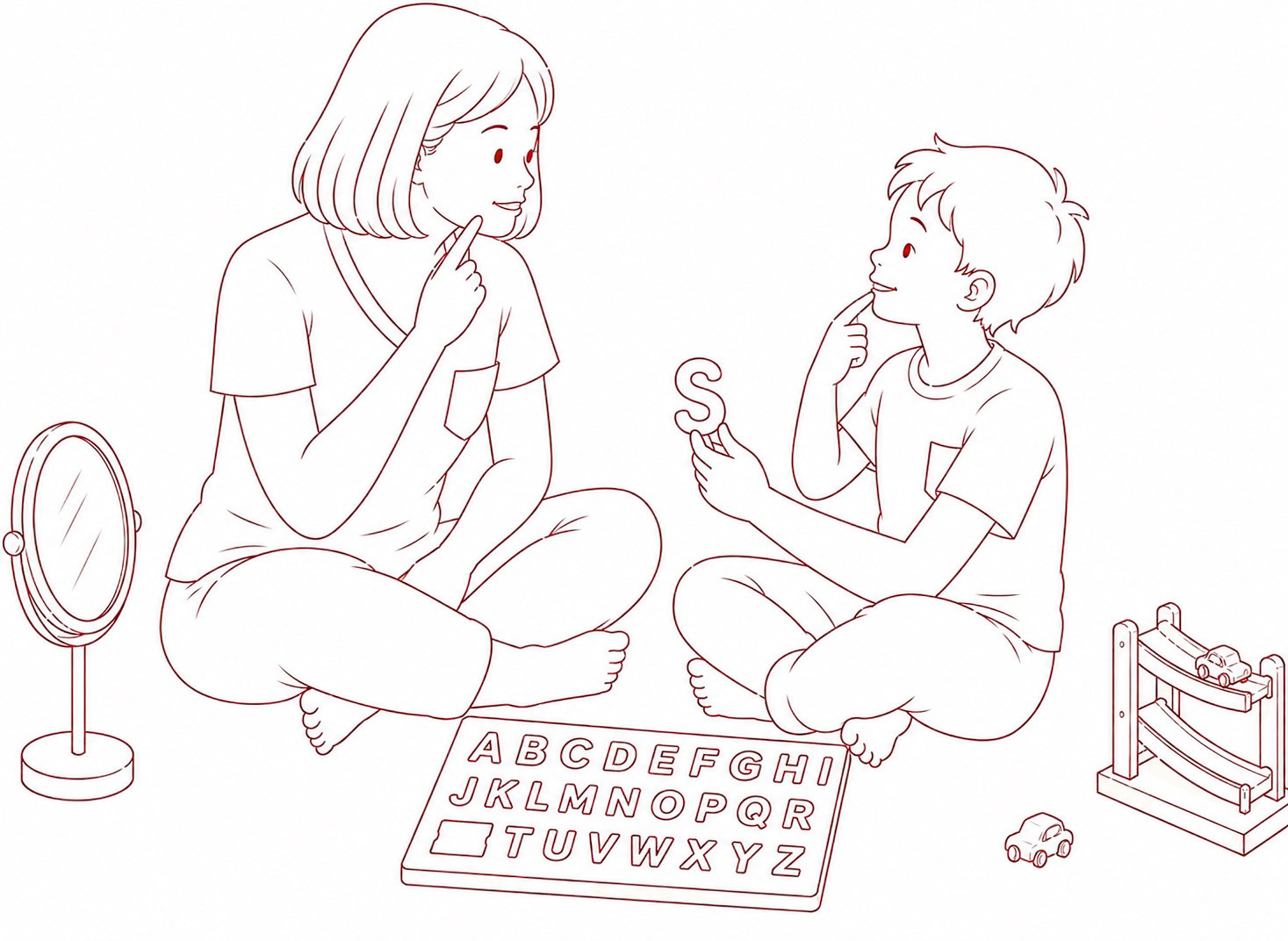
Speech sound disorders can affect a child’s ability to produce sounds clearly or use speech sounds correctly in words.
If your child is hard to understand, leaves out or substitutes sounds, has a lisp, or struggles with sounds like /r/ or /s/, a speech-language pathologist can help determine whether their speech is developing as expected. Lotus Speech & Language Therapy provides individualized, play-based pediatric speech therapy in Austin for articulation disorders, phonological disorders, and motor speech disorders.
What are Speech Sound Disorders?
Speech sound disorders affect how a child produces and uses sounds in words. Difficulties may involve the production of individual speech sounds, patterns of sound errors that affect multiple sounds, or the planning and coordination of the movements needed for speech.
Articulation Disorders
Articulation refers to the way the lips, tongue, teeth, and jaw work together to produce individual speech sounds. An articulation disorder occurs when a child has difficulty producing one or more specific sounds accurately beyond the age when those sounds are expected to develop.
Articulation errors may include substitutions, omissions, additions, or distortions of individual speech sounds.
Phonological Disorders

Phonological disorders occur when a child continues to use phonological processes, or predictable patterns of sound errors, beyond the age when they are typically expected to resolve. These patterns can affect multiple sounds and words and may significantly reduce speech intelligibility.
Common phonological processes include fronting (“tat” for “cat”), stopping (“tun” for “sun”), final consonant deletion (“ca” for “cat”), and cluster reduction (“poon” for “spoon”).
Motor Speech Disorders
Motor speech disorders affect the planning, coordination, or execution of the movements needed to produce speech. A child may know what they want to say but have difficulty coordinating the precise movements and sequences required to produce sounds, syllables, and words clearly and consistently.
Motor speech disorders include childhood apraxia of speech (CAS) and dysarthria.
When Should I Consider a Speech Sound Evaluation?
Some speech sound errors are a typical part of development. A speech sound evaluation may be recommended when errors persist beyond the age they are expected to resolve, significantly affect how well a child is understood, or begin to impact everyday communication.

Consider an evaluation if your child:
Speech Sound Evaluations
A speech sound evaluation looks beyond which sounds a child can or cannot say. The SLP assesses the types and patterns of speech sound errors, overall intelligibility, sound production across words and contexts, stimulability, and consistency of productions. When appropriate, oral structures and motor speech skills may also be evaluated to better understand the nature of the child’s speech difficulty.
The results help determine whether a child’s speech is developing as expected, identify the type of speech sound difficulty present, and guide individualized treatment recommendations.
Individualized Speech Therapy for Speech Sound Disorders
Speech therapy for speech sound disorders is individualized based on the type of speech difficulty, the sounds or patterns affected, and your child’s specific needs. Treatment may focus on learning to produce individual speech sounds, reducing phonological processes, or improving the planning and coordination of movements for speech.
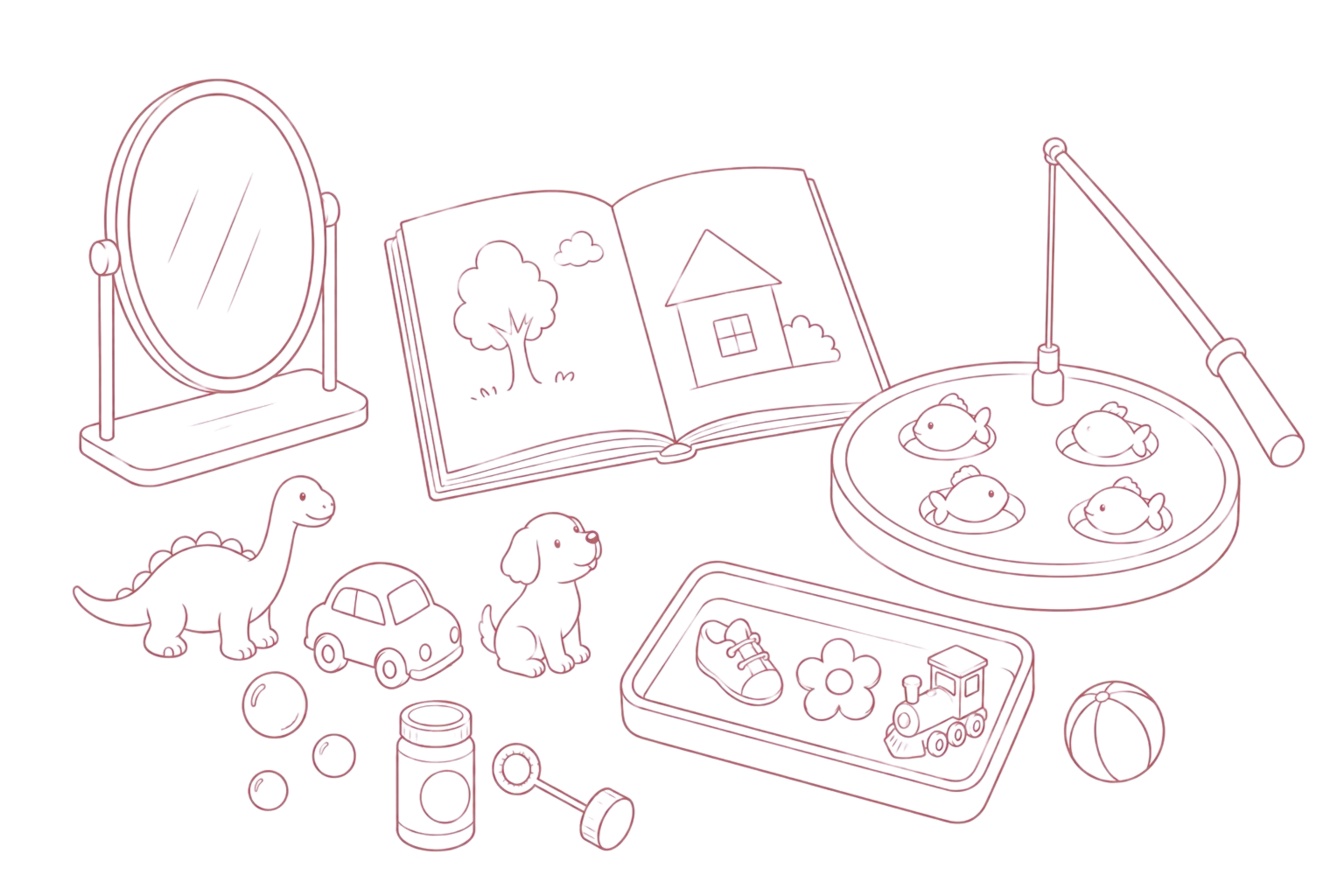
At Lotus Speech & Language Therapy, evidence-based treatment strategies are incorporated into engaging, play-based activities. Games, books, toys, and your child’s interests are used to provide meaningful opportunities to practice speech sounds, improve speech intelligibility, and help new skills carry over into everyday communication.
Frequently Asked Questions
-
Most children acquire the majority of English speech sounds by age 5, although later-developing sounds such as /r/ and “th” may continue to develop beyond this age. Speech sound development varies, and the age a sound is typically acquired is only one factor used to determine whether a child may benefit from a speech evaluation.
You do not need to wait until your child is expected to have mastered every speech sound to seek an evaluation. If your child is difficult to understand, has persistent speech sound errors or phonological patterns, becomes frustrated when communicating, or you are concerned about their speech development, a speech-language pathologist can determine whether their speech is developing as expected and whether speech therapy is recommended.
-
Some speech sound errors and phonological processes are a typical part of development and may resolve as a child gets older. However, speech errors that persist beyond the age they are expected to resolve, are atypical for a child’s development, or significantly affect speech intelligibility may indicate a speech sound disorder.
If your child is frequently difficult to understand, continues to use persistent speech sound errors or phonological processes, or becomes frustrated when communicating, an evaluation with a speech-language pathologist can help determine whether monitoring or speech therapy is appropriate.
-
An articulation disorder involves difficulty producing one or more specific speech sounds accurately, while a phonological disorder involves patterns of speech sound errors that affect multiple sounds or words. Articulation errors may include substitutions, omissions, additions, or distortions of individual sounds. Phonological disorders involve predictable error patterns, or phonological processes, such as fronting, stopping, final consonant deletion, or cluster reduction.
Some children may have both articulation and phonological difficulties. A comprehensive speech sound evaluation can help identify the type and pattern of errors a child is producing and determine the most appropriate approach to treatment.
-
There is no set timeline for speech therapy because treatment is individualized to each child. The length of therapy can vary based on the type and severity of the speech sound disorder, the number and type of sounds or phonological patterns being targeted, your child’s stimulability, and how consistently new speech skills carry over into everyday communication.
Progress is monitored throughout speech therapy, and goals and treatment strategies are adjusted as your child’s speech develops. Your speech-language pathologist can provide a more individualized estimate after completing a comprehensive speech sound evaluation.
-
Yes. Speech therapy can help both children and adults improve the production of sounds affected by a lisp, most commonly /s/ and /z/. Treatment may focus on tongue placement, airflow, accurate sound production, and gradually carrying the new speech pattern from individual sounds into words, sentences, and conversation.
There are different types of lisps, including frontal and lateral lisps, and treatment recommendations depend on the type of lisp, age, speech characteristics, and individual communication goals. A speech sound evaluation can identify the type of lisp and determine an appropriate treatment approach.
-
Home practice is an important part of helping children carry new speech skills into everyday communication, but it should be guided by a speech-language pathologist. The sounds, practice level, and cues used at home should be individualized to your child’s specific speech goals.
At Lotus Speech & Language Therapy, families receive individualized home exercise plans with strategies and activities to support skills targeted during therapy. Practice may be incorporated into play, books, games, or everyday routines to help children generalize new speech skills beyond the therapy session.
Have Concerns About Your Child’s Speech?
If your child is difficult to understand or you have concerns about their speech sound development, I’d be happy to talk with you about whether a speech sound evaluation may be appropriate.